


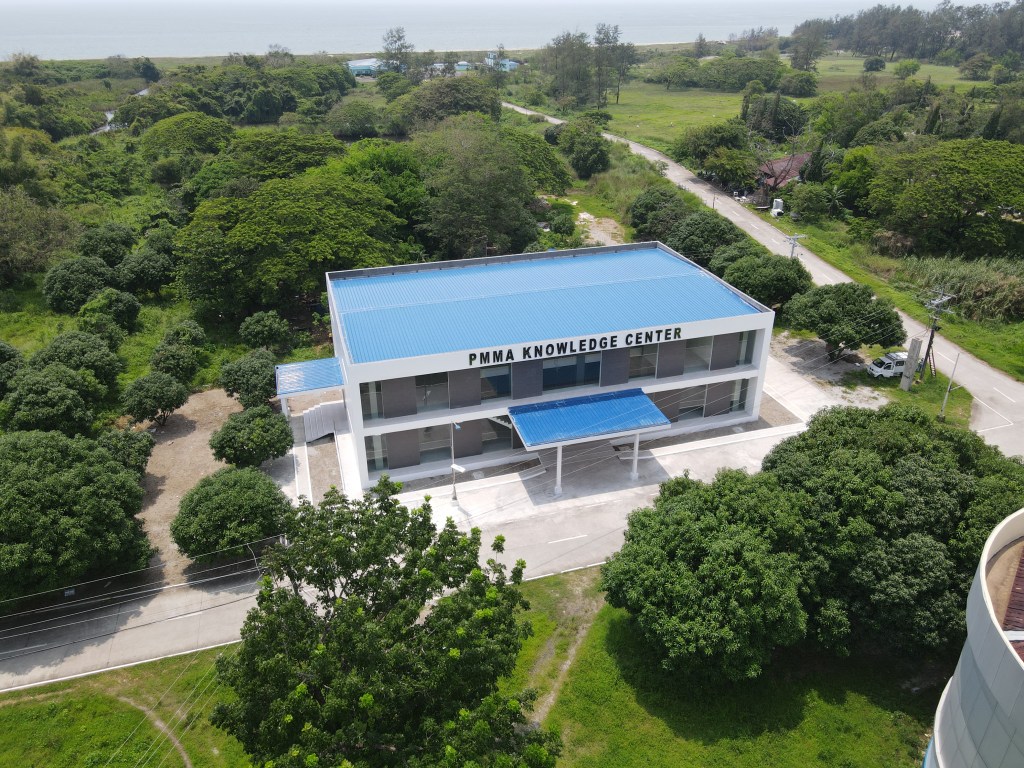
The country’s oldest maritime institution, the Philippine Merchant Marine Academy (PMMA), formerly known as Escuela de Nautica de Manila and later Philippine Nautical School (PNS), inaugurated the PMMA Knowledge Center in 2022. The two-story digital library was designed to “future-proof” maritime cadets, especially with the advent of digitization, automation, and decarbonization.
The P50 million Knowledge Center was a gift to the PMMA from the Associated Marine Officers and Seamen’s Union of the Philippines (AMOSUP) as a memorial building dedicated to AMOSUP founder, the late Capt. Gregorio Oca, himself a member of the PMMA class of 1948.
Capt. Oca also founded the Maritime Academy of Asia and the Pacific (MAAP), one of the leading maritime schools in the country. Some people refer to MAAP as a rival school to the PMMA in producing world-class cadets to later man the vessels that circle the globe and keep the world economy thriving and surviving.
The inauguration of the Knowledge Center was a “homecoming” of sorts for one of the pillars of the maritime industry and father of modern seafarers, Capt. Oca. During the formal ceremony with the opening of the center at the PMMA’s Zambales campus, the Academy’s Superintendent Commodore Joel Abutal “welcomed home” Capt. Oca.
The ceremony was both poignant and important with the presence of Dr. Conrado F. Oca, current president of AMOSUP and son of the late Capt. Oca, and MAAP’s President VAdm. Eduardo Ma R. Santos, who has been at the helm of MAAP since it was opened in 1998.
The concrete edifice is envisioned to bridge the strong bond of ties between the PMMA and MAAP and a standing representation of one man’s grand dream of making the country a leading provider of the best and most qualified seafarers to man the global fleet. A concrete manifestation of Capt. Oca’s passionate dream of making a mark in the world of global shipping by offering a modern, excellent venue for maritime education and training aside from founding the biggest union of seafarers in the world, the AMOSUP.
In his message, Commodore Abutal of the PMMA stressed, “now more than ever and faced with challenges never seen before” institutions like the PMMA and the MAAP have to unite, forget personal pride and consequences, for the good of the Filipino seafarers and the country’s seafaring industry. This is something that Capt. Oca has always advocated when he was alive.
Dr. Oca, during the inauguration of the Knowledge Center, said that PMMA and MAAP should take advantage of the common link of brotherhood, Capt. Oca himself, to revive and strengthen the Philippine maritime industry after the devastating effect of the pandemic and looming problems that will certainly affect the global shipping industry with the inevitable changes that come with the advent of digitization, automation, and decarbonization.
TOUGHENING UP AND INNOVATING FOR UNPRECENDENTED CHALLENGES FACING MODERN SHIPPING
The shipping industry is undergoing a major transformation, driven by the twin forces of digitization and decarbonization.
Filipino seafarers, tough and resilient as they may be, face an unprecedented challenge in the form of new shipping regulations due to digitization and decarbonization. Member states of the International Maritime Organization (IMO) are all required to follow certain regulations and requirements that follow the ratification and issuance of new rules about these changes.
Digitization is using digital technologies to improve efficiency, transparency, and sustainability. In shipping, this can be seen in the use of:
Digital twins: Digital twins are virtual replicas of shithat can be used to monitor performance, identify potential problems, and optimize operations.
Big data: Big data analytics can be used to track and analyze shipping data, such as vessel movements, fuel consumption, and weather patterns. This information can be used to improve decision-making and reduce emissions.
Artificial intelligence (AI): AI is being used to develop new
technologies for shipping, such as autonomous ships and smart ports.
Decarbonization is the process of reducing greenhouse gas emissions. In shipping, this is a major challenge, as the industry is responsible for about 2% of global CO2 emissions. However, several technologies can be used to decarbonize shipping, such as:
Low-carbon fuels: Low-carbon fuels, such as liquefied natural gas (LNG) and methanol, can be used to reduce emissions.
Energy efficiency measures: Energy efficiency measures, such as hull optimization and slow steaming, can also help to reduce emissions.
Alternative propulsion technologies: Alternative propulsion technologies, such as wind and solar power, are being developed to power ships without emissions.
Faced with these major changes, the country’s top two premier maritime institutions stand at the threshold of an impactful change that could spell victory or an unfathomable loss if the country fails to maintain its position and adjust to these unrelenting changes that come with the introduction of new vessels and a required upskilling of our seafarers in preparation.
These changes will certainly entail training and a shift in the mindset of all those involved in maritime education and training of our maritime cadets and seafarers.
READY TO FACE THE CHALLENGES
“We are ready!” is a shared stance between MAAP and PMMA. Both institutions have assured that they are more than ready to face the challenges that threaten the fabric of the Philippines’ maritime legacy.
Change is inevitable in the shipping industry, so it is important to be prepared.
The two premier institutions may be pitted against each other in some ways, but at the heart of their relationship is one man who made possible the creation of one of the biggest seafarers’ unions in the world, AMOSUP: Capt. Oca.
The ties that bind these two premier institutions are not just about the late great captain, but also about the more important task of keeping the nation’s steady supply of qualified crew to the global fleet and keeping jobs for Filipinos to continue manning the vessels that are still the major components fueling the continued growth of the global economy. [continue at next page]


 FAS Maritime
Leave a comment