

Filipinos have, for six decades, felt pride in the skills and talents of Filipino seafarers. And with good reason: for the longest time, Filipino seafarers have been the top choice as crewmen by many, if not most, shipping companies. There was a time when Filipinos manned 45 percent of the world’s shipping fleets. But not anymore. From 45 percent, the share of Filipino seafarers in the world shipping fleets has dropped to a mere 14%, and for a rather disappointing, depressing reason.
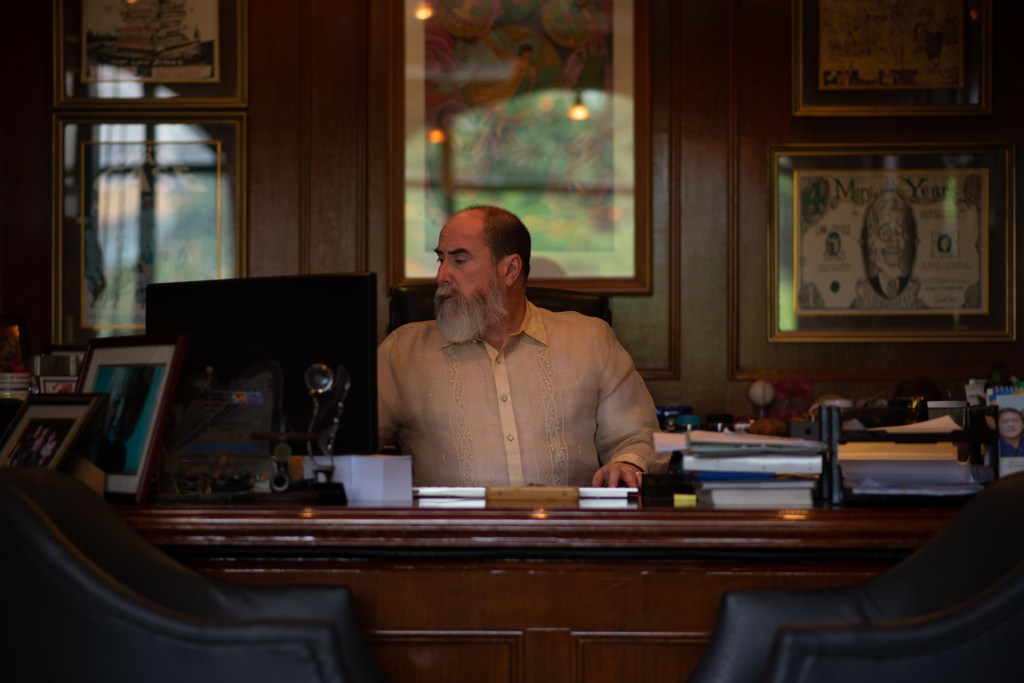
One of the clearest, most sober, and insightful voices to sound the alarm over the diminishing market share of Filipino seafarers in the global maritime industry is Miguel Rocha, President, and CEO of C.F. Sharp Crew Management, Inc., which is the pioneering provider of Filipino shipping crews since 1963. Sixty years later, C.F. Sharp continues its business in the face of modern, 21st-century challenges, one of which is the fraudulent claims scam that, as Rocha and other maritime industry leaders might quite rightly suspect, is perpetrated by a syndicate.
“As you know, when the seafarers become ill or injured at sea, the priority of the ship owner is to care for them and to provide the medical attention and treatment that they deserve. This is the right thing to do, ethically and business-wise; the ship owners need the seafarers to get back to fitness and continue to work,” said Rocha.
On occasions when a seafarer becomes disabled due to a work-related mishap aboard a ship, he is entitled to claim compensation. The amount compensated will depend on a “disability grading” that indicates the level of disability with the corresponding monetary compensation. For example, a crewman who accidentally gets an arm broken will receive a bigger disability compensation compared to another crewman who had a fingertip cut off.
SHUTTING DOWN FRAUD CLAIMS
There’s no problem if the crewman agrees with the disability grading given to his case and the compensated amount. When there’s a disagreement, however, e.g., the crewman feels his disability is greater than what the shipping company has graded it, then both parties go through an arbitration and claims process in order to settle how much disability payment should be paid.
“Ideally, this process of arbitration and deliberation is able to address these concerns in a fair and equitable way. If this ideal process happened all the time, there would be no issue. Unfortunately, there are unscrupulous individuals who take advantage of loopholes in the law and use provisions of the Philippine Labor Code and applying such to CBA; this results in these people gaining the ability to file fraudulent claims.
For example, if a crewman breaks a finger or loses a fingertip–when this crewman gets approached by these unscrupulous people, and they are able to sway him to go along with the fraud, the crewman will claim that he is absolutely and permanently disabled. He will then file a claim to receive the maximum award available as compensation,” said Rocha.
To any honest, reasonable person, it’s obvious that a broken finger or a severed fingertip is worlds away from absolute and permanent disability. One would expect that the fraudulent claim, upon checking by the competent authority, would immediately be discarded and corrected. Unfortunately, under the DOLE, NLRC, and NCMB, the opposite happens.
Under the watch of these three government agencies tasked with fairly and equitably mediating disability claims of seafarers, millions of pesos’ worth of fraudulent claims have been paid by ship owners over the past decades. And the current system makes any appeal made by the ship owner practically useless; the ship owner ends up getting cheated and swindled out of millions of pesos in fraudulent claims made by Filipino seafarers–with little to no hope of getting their money back.
“In Philippine labor courts, decisions are final and executory. Once the arbitrator rules in favor of the claimant, the ship owner has to pay. And, as we’ve discussed, there have been many fraudulent claims approved by Philippine arbitrators, resulting in millions of pesos in additional costs to ship owners. Even when the arbitral body’s faulty decision is later on reversed by a higher court, even by the Supreme Court, it’s impossible to get back the payout awarded to the fraudulent claim. The funds would be gone by then. The millions of pesos paid in false claims make a Filipino seafarer more costly to hire as a crewman.
“Like any business, a shipping company operates each ship on a budget. There’s a set amount for wages, overtime, all those things. The way things work presently, ship owners who hire Filipino seafarers now have to factor in the costs incurred by fraudulent disability claims. If a ship owner gets hit by two or three bad arbitral decisions, his crew costs could go up by as much as one million dollars. Ship owners cannot afford to pay for this level of crew costs; and worse, they cannot handle the unpredictability of the claims process in the Philippines,” Rocha explained.
The “unpredictability” of the process, of course, is caused by the corrupt practice that allows fraudulent disability claims to prosper. No ship owner can feel assured that a claims process in the Philippines will be fair and equitable, and will have to prepare for the worst–increasing the budgetary cost allotted to each Filipino seafarer hired. Not all ship owners are willing or able to do this, despite the high level of competence and skill that Filipino seafarers possess.
“Some ship owners have decided to stop hiring Filipinos altogether. I’ve spoken to one ship owner who already withdrew from the Philippines. He says that he’s not really happy with the Indian or Indonesian crew they chose in place of Filipinos. But despite the higher maintenance costs, higher repair costs, they would rather take those increases in overheads for predictability and reliability. It’s still more affordable compared to the unexpected hits that come from doing business in the Philippines,” Rocha said.
It’s a bitter reality that an unchecked fraud claims scam has become the reason why many shipping fleets are now hiring seafarers from Vietnam, Indonesia, India, Myanmar, and Bangladesh as alternative manpower sources to the Philippines.
But in the end, the Filipino seafarer who gets roped into this scam is the one who ultimately loses: most of them don’t even get the millions of pesos in compensation that they supposedly “won” from the labor court. Most of the money goes to the unscrupulous people who operate the scam; the seafarers get very little out of the millions promised to them by the scammers. Furthermore, the scam ruins the reputation of Filipino seafarers and sets Filipino maritime labor towards an uncertain future or perhaps, no future at all.
“It’s a loss of jobs and a loss of opportunity. Filipino seafarers lose a lot of jobs on ships, jobs that we used to be able to get. A Filipino is replaced with a Burmese, an Indonesian, an Indian. And even when there is a boom in shipping [as happens when, say, there are more construction projects in certain countries, thus, more raw materials need to be shipped there] these crew jobs are not being given to the Philippines. We are losing future crew jobs that could have gone to Filipinos,” Rocha said. [continue at page 2]



 FAS Maritime
Leave a comment